


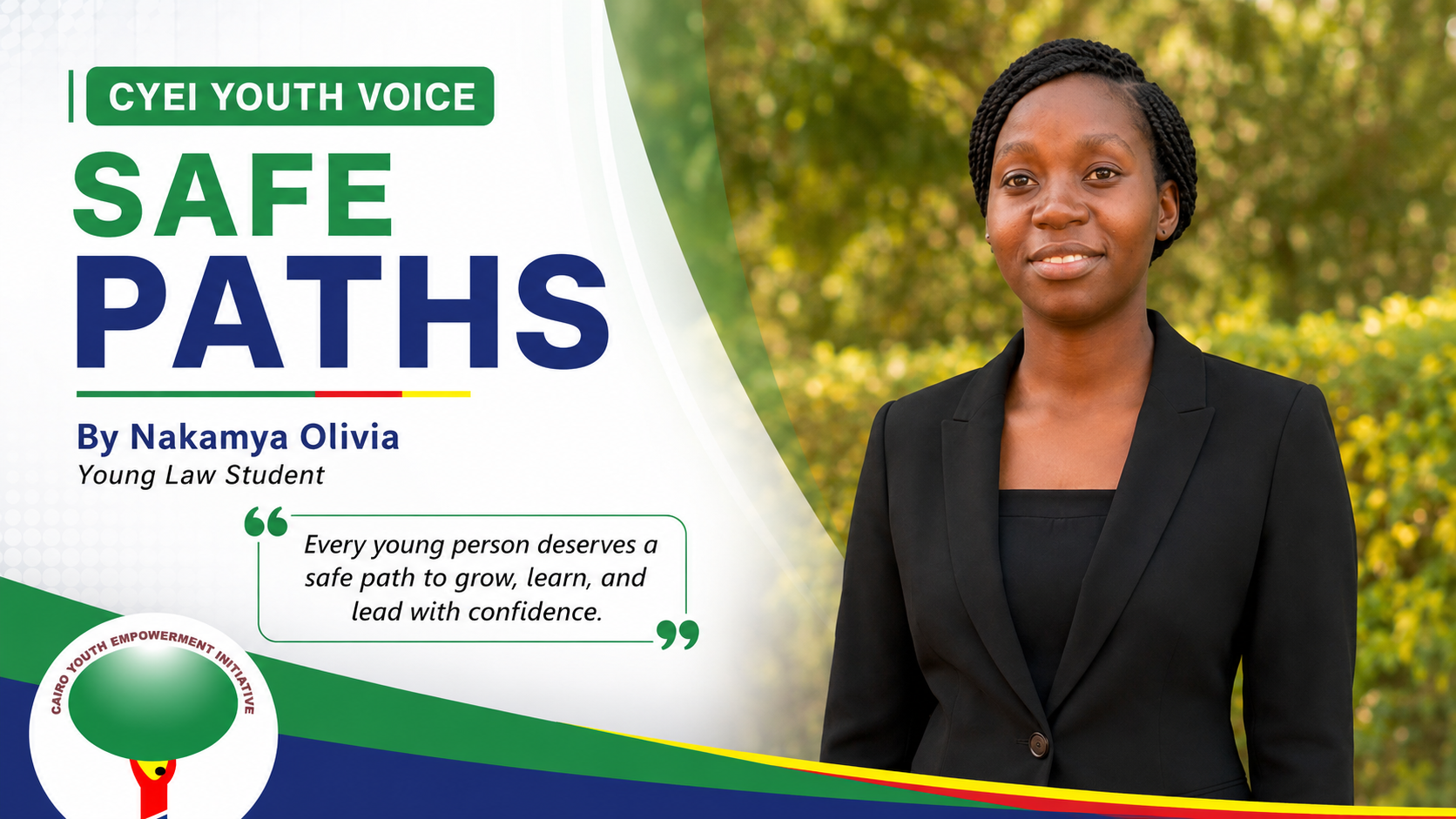
After completing Senior Six, I was eager to continue learning, gain experience and find opportunities that could help me build my future. Like many young people, I searched for jobs, scholarships, sponsorships, internships and training opportunities.
I quickly learnt that searching for an opportunity can also expose a young person to serious risks.
Some advertisements looked genuine but provided very little information about the organisation behind them. Some people requested payments before explaining what the opportunity involved. Others shared documents that were difficult to understand or made promises that sounded attractive but could not be verified.
A young person who urgently needs school fees, employment or training may feel pressured to accept an opportunity without asking enough questions. Young women can be especially vulnerable when recruiters ask them to meet privately, travel to unfamiliar places, surrender personal documents or keep conversations secret.
My experience taught me that opportunity access is not only about finding information. It is also about knowing how to check whether that information is safe, lawful and trustworthy.
Before applying or paying money, young people should ask basic questions. Is the organisation registered or publicly identifiable? Does it have an official website, email address or physical office? Are the requirements clearly explained? Can the recruiter’s identity be confirmed? Is there a written agreement? Why is payment being requested, and can it be verified through an official channel?
Young people should also understand the documents they are being asked to sign. They should never be ashamed to request time to read, seek guidance or consult someone they trust. Urgency, secrecy and pressure are warning signs, especially where money, travel, employment or personal information is involved.
These experiences inspired me to begin developing Safe Paths Initiative, an early-stage youth-led awareness and referral initiative promoting more transparent, informed and safer access to opportunities for young women.
Safe Paths is not a recruitment agency, an investigation service or a substitute for qualified legal and protection professionals. Its purpose is to support practical legal literacy, opportunity-verification guidance, peer discussion and referral information.
I want young women to understand that asking questions does not mean they are difficult or ungrateful. It means they value their safety, dignity and future.
Schools, universities, families, youth organisations and opportunity providers also have responsibilities. They should explain opportunities clearly, publish transparent requirements, avoid hidden charges, protect applicants’ personal information and provide safe ways to report suspicious behaviour.
My message to other young people is simple: do not allow pressure or desperation to silence your questions. Verify before paying, travelling, signing or sharing sensitive information. Speak to someone you trust, keep records of communication and walk away when an opportunity does not feel safe.
Every young person deserves access to opportunity. They also deserve a safe path towards it.
